Showing posts with label 2010. Show all posts

Tuesday, 10 May 2011

Ten Films 2010: The Man from Nowhere


Cha Tae-sik is still, a ghost that haunts a slum tenement. He spends his days hidden in a pawn brokers doling out pocket money to junkies and strays. He keeps himself removed, and impersonal. Half his face is hidden by a mop of unkempt hair, eyes frequently fixed elsewhere. He's Spike Spiegel's languid live-action doppelganger; all boredom and determined disinclination. Tae-sik's sole concession to company is a chatty little girl named So-mi who needs somewhere else to be while her mum shoots up. After some ambitious, but ill-considered, swindling said mother finds herself gobbled up by the organ trade. So-mi is enslaved, drafted to serve a drug trafficking underclass. Tae-sik isn't pleased. He must move now. The Man from Nowhere plays around with prolonged in-action. It understands how to slowly trickle out hero information for maximum pop. It's aware enough to strand its protagonists in unfavourable odds situations just as his past life as a human weapon is teased to light. Violence is kept intimate and ruinous - knees on noses and knives on arteries. Above all, The Man from Nowhere knows that the best kind of avenger is one who no longer gives a fuck. Phantom men with no ties, dedicating their dying act to the utter extermination of everything and everyone foolish enough to stand in their way.

Wednesday, 16 February 2011

Ten Films 2010: The Social Network


The Social Network provides a pretty stunning case for the screenwriter as primary author. Film is typically thought of as a director's medium - if a film picks up praise it is likely to be heaped upon the person who helmed the picture. The screenwriter is often lost in the plaudits muddle, only occasionally rating a mention. Film criticism is especially guilty of this practice. Often it's an aesthetic concern, ascribing authorial intent to a groaning list of contributors is messy, making for dense, clumsy sentences. Much better to pick one figure and build your argument around them. You can always make the case that the director has final say in most instances, meaning a film is reflective of their taste and choices.

Unfortunately for that writing model it is impossible to talk about The Social Network without mentioning screenwriter Aaron Sorkin. To attempt to do so would be dishonest. Although it is folly to ascribe total intent to one individual in a collaborative medium such as film, certain people invite this kind of notice. Aaron Sorkin is one of them. The film is driven by his characters and his words. Sorkin's authorial stamp threatens to overwhelm director David Fincher's. The film motors on Sorkin's main obsession - intelligent and capable, but essentially damaged, masculinity. Devoid of any real thriller through-line the film zips on jigsaw puzzling scenes of arrogance and conflated ego. The Social Network is endless scenes of brilliant young men with varying degrees of social or sexual entitlement yammering and swiping at each other over the nature of authorship. It should be mind-numbing. It isn't because Sorkin can make the frazzled, contemptuous sneers of deluded dickheads sound like pop music.

Sunday, 6 February 2011

Ten Films 2010: Never Let Me Go


First and foremost, Alex Garland and Mark Romanek's film captures the overwhelming sense of otherness that dominated Kazuo Ishiguro's book. Never Let Me Go features a group of people with preascribed cancellation orders. They aren't to live and dream, instead they have placeholder lives that rattle along in a directionless funk whilst their organs mature, ready for harvest. This deadline, and the total anonymity of their upbringing have apparently created a noticeably different state of human being. The clones raised at Hailsham pride themselves on a kind of emotional neutrality, their only sanctioned expression through competitive art. As they go out into the world, they are compliant, and often complicit, in their dilemma. Escape, apparently never considered.

The horror of this situation is that this isn't necessarily their natural state. They have been taught to act this way. The world views them as alien, so that is how they act. They aren't even considered human by those most sympathetic to their plight. They are conditioned from birth to be other. Romanek's mise en scene toys lightly with this inhumanity; Never Let Me Go's world is one of seaside resorts and provincial motoring, all frozen in a mid-twentieth century malaise. The organ trade doesn't feed into some horrific off-screen future war, instead, it quietly and discreetly extends the lives of self-designated superiors at the expense of an underclass of children.

Ten Films 2010: Universal Soldier: Regeneration


A dour science-fiction nasty that operates on a pleasantly clipped shorthand. Specifically, machine men batter and brutalise each other against a derelict Soviet backdrop, their violence an atypically ugly MMA stomp. Jean-Claude Van Damme returns as a lined relic, kidnapped and doped up by panicking officials to face a rogue muscle monster with a pit bull mindset. Dolph Lundgren floats around as a confused clone, fixated on violent repetition, but unable to understand why. None of the heavily augmented soldiers display any recognisably human traits. Each is an automaton locked into their own distinct, mechanised predicament. Further to this, Van Damme's character doesn't triumph because of any underlining humanity, rather Deveraux is simply the most recently maintained - his performance supplemented by a battlefield deployed syringe of psychotropic amphetamines. Everyone in Universal Soldier: Regeneration is alien; no-one can be related to. These aren't men anymore, and the film knows this. It revels in it.

Ten Films 2010: The Horde


Everybody in The Horde is revolting. While Paris burns a team of plainclothes police raid a rotting tower block with the extracurricular intention of rubbing out a group of cop-killers. Captured and beaten, the group is then forced to team up with their vicious quarry when the sprinting dead appear. Although not particularly moral to begin with, the sky rise slaughterhouse brings out a poisonous venality in our survivors. Loyalties are reconfigured, then shed as ruthless personal safety becomes everybody's primary concern. Power shifts rapidly as the survivors struggle to fend off the berserker zombies and dangerous ego trips. The Horde is notable for inviting viewers to re-evaluate how they view these stampeding bodies. Are they meat things to be gleefully pulped, or ex-humans that we should pity?

Wednesday, 2 February 2011

Ten Films 2010: Harry Potter and the Deathly Hallows: Part 1


Three children struggle to vanquish ultimate evil, armed only with oblique, seemingly useless clues and tools. The payday split serves this half of Harry Potter and the Deathly Hallows well. Shorn of its triumphalist twin, this Hallow plays like a defeatist mood piece, concerned only with the relentless assurance that these kids are toothless and alone. The break also allows extra-curricular detailing to creep in. Depressed waifs cling to each other while a catchy dirge plays, and the full impact of Voldemort's ethnic cleanse agenda is teased through a series of ruined postcard images.

Tuesday, 25 January 2011

Ten Video Games 2010: Red Dead Redemption


Aside from freeing Rockstar's free-roam template from dull health management, Red Dead Redemption excels in providing an incentivised narrative. Although the player likely does not care about John Marston's imprisoned family, we are made to understand that Marston does. Marston yearns for his family safe return, it is at the forefront of all his dealings with his world. Plainly, it's his motor.

Balance for this single-minded questing is provided through the detailing of Marston as a character. He's a charming mix of grumpy, dead-pan sour talk and roughly hewn industrial gentry. He grumbles at fetch quests, yelps at danger, and cheers success. His voice is a constant presence in Red Dead Redemption, a charismatic commentary on your actions. Rockstar have created a hero that is incredibly easy to like; although his home life is an abstract, it quickly becomes important to the player because it is important to their beloved toy.

Rockstar
also work hard to make Marston's quest seem lightly absurd. There's a constant suggestion throughout that his efforts are in vain, and his family are long gone. So when an opportunity for contact finally does arise, the player's feelings match Marston's own. Both are tentative and fearful. This is Red Dead Redemption's success, the player and avatar emotionally aligned; desperate to get home, but terrified at what they might find when they get there.

Ten Video Games 2010: Bayonetta


Platinum Games to the rescue! In just a year the studio has carved itself out a marketplace niche by being utterly focused on providing the kind of entertainment Capcom, and the wider Japanese games industry, are now either reluctant or unable to deliver. In Bayonetta, ex-Capcom staffer Hideki Kamiya has gifted players an onion-peel action title to rival his own masterwork Devil May Cry. The systems and armaments conceal a yawning depth that allows each and every weapon to be situation usable over the game's vast array of difficulty options. Levels are short, and battles are briefs whirls of constant movement. Bosses tower like stained glass skyscrapers, forcing your hirsute porno-witch to scramble all over their surface hunting vulnerabilities. Bayonetta is daft, totally engaging, and blessed with a fan's eye for detail.

Monday, 24 January 2011

Ten Video Games 2010: After Burner Climax


Like Game Dev Story, this is a slight cheat. After Burner Climax has existed as an arcade cab since 2006, but it took until this year for the title to finally see a home console release. AM2 gleefully pick up where Yu Suzuki left off, crafting a full propulsion screamer built on speed and missiles, and missiles and speed. Reach certain play goals and you can monkey around with dip switch settings to greatly increase, or decrease, the difficulty of this coin-op coin guzzler. Bulletin short and packed with an entire nation of jet fighters to mangle, this is Sega operating at maximum understanding of their full-throttle legacy.

Tuesday, 18 January 2011

Ten Video Games 2010: Super Street Fighter IV


Despite formulating the completely excellent polygon scrapper Rival Schools, Capcom has always struggled to translate its premiere fighter franchise into 3D. The Street Fighter licence was farmed out to Arika for the Street Fighter EX series, a love-it or loathe-it side-step brand, hobbled out the gate in Europe thanks to lousy 50Hz conversions. Regardless, even on 60Hz import the results never touched contemporary 2D installments. After the wonderful, but undersubscribed, Street Fighter III series it seemed like Ryu et al were being abandoned to nostalgia prompts in big-budget franchise clashers. Woe was us!

The Street Fighter series unexpectedly bounced back in summer 2008 with the arcade release of Street Fighter IV, thanks to Yoshinori Ono and The Rumble Fish developer Dimps. Street Fighter IV ditched any pretense of arena roam play, instead sticking to 2D planes with 3D assets. The vast cast were rendered as chunky, colourful charm lumps, blessed with spectacular ultra move movies, and Looney Tune injury faces. Super Street Fighter IV is the third iteration of the IV series, with a fourth, Super Street Fighter IV Arcade Edition, on its way. The title heaves with features, from the re-introduction of Final Fight's bonus vandalism stages to minute frame tweaks for combo connects and a comprehensive suite of multiplayer matchmaking. It's an exhaustive package, designed for utter scrutiny, and maximum replayability.

Monday, 17 January 2011

Ten Video Games 2010: Battlefield: Bad Company 2


Apart from a single player that failed to make much use of the properties various strengths, the only thing that let Battlefield: Bad Company 2's otherwise excellent package down was the community. On release it was a struggle to find a squad that wasn't entirely concerned with pitching up tent on a hillside armed with a camouflaged Ghillie suit and scoped rifle. To get the most out of Bad Company 2, you needed objective minded team mates, willing to fill action dictated roles. Should you stumble onto just that, Bad Company 2 distinguished itself admirably. Unlike Halo's shield heavy war of attrition or Call of Duty's micro-calculation bum rushing, Bad Company 2 cast you as a fragile component in a vast theatre of war. Players were tasked with finding their place in an ever-changing conflict. Is your team low on re-enforcements? Switch up and become a hyper-mobile medic and zap them back to life. Allies fond of junking valuable equipment? Ride shotgun as an engineer and fix their mistakes. Find you niche in a cohesive whole, and any minor success could mangle the ambitions of team boring sniper.

Ten Video Games 2010: Pac-Man Championship Edition DX


Almost anti-formulaic in how it presents an ancient brand. Legacy gameplay is largely junked, to explore what can be done with the basics of the Pac-Man formula. Rather than individual seekers, enemy Ghost behaviour is simplified to a huddled, mob mentality. Wake a Ghost whilst getting your chomp on in Pac-Man Championship Edition DX, and it'll ride your slipstream, waiting for a mistake. The more Smartie coloured phantoms you disturb, the longer the pursuit trail, until you've got a vast, snaking conga line snapping at your heels. Couple that danger-play with a slow-motion zoom to highlight potential mistakes, and an emergency bomb to shrug off pursuers, and you get a speed focused love letter to Namco's greedy little critter.

Sunday, 9 January 2011

Ten Video Games 2010: Game Dev Story


Beginning on the cusp of the 8-bit console era, Game Dev Story charts the progress of a video game start-up. Studio named and coders hired, early perils include high licence costs for console development, an unmotivated staff, and an indifferent audience. Although dressed up with cutesy micro SD stylings, there's a ruthless heart beating in Game Dev. The tippy-tappy stat management masks a small business headache simulator. You too can experience the joys of employee loathing, and industry exclusion! Players meander on as the years mount, perhaps hitting on a vague formula for success. The temptation to run this winning combination into the ground is total. Whether or not Game Dev Story bears any relation to actual game development is irrelevant; this iPhone remix of a decade old Japanese PC title allows an uncomfortable glimpse into any newly successful business. The wealthier you get, the further away you slip from your niche exploitation beginnings, often to the point were once loyal customers begin to resemble a mob of ugly discontents. How dare they reject your latest masterpiece! They should be grateful you make anything for them at all!

Friday, 7 January 2011

Ten Video Games 2010: Call of Duty: Black Ops


It would be gross hypocrisy not to include Call of Duty: Black Ops. Although in many ways a disappointment, like past installments it continues to swamp free time. If nothing else, it's a one-stop spot for online enabled friends to meet up and eviscerate each other. As a package, Black Ops is lopsided. The single-player peaks very early with a Soviet space program sabotage, only ever returning to such pulpy delights when it flashbacks to a post-war trip to The Artic Circle to exterminate shivering science Nazis. The rest of the campaign is an ignorant limp through death corridors, staffed by poor people, whom you exterminate with million dollar prototype weapons. Although the actual title suggested promise, Treyarch have failed to fully engage with the isolationist psychosis that drove America's wet work industry. Everything is reduced to a one-note holy crusade against Godless communists. Gameplay rarely dips below fun, but the agenda leaves a sour taste.

Black Ops makes the list thanks to its multiplayer. Treyarch have tweaked Infinity Ward's Modern Warfare 2 model, reigning in the madness to bring the series back in-line with the meat and potatoes suite of Call of Duty 4: Modern Warfare. Their work isn't perfect; pro perks are hassle to chase, the economy system is fussy, and the net coding can do an excellent impression of useless. The fact remains though, Treyarch have inherited an almost peerless multiplayer platform. Very few other franchises gift their weapons with such finely tuned heft and feedback; firing any gun in any Call of Duty feels satisfying. Treyarch's changes are mostly balance related, whiffing the easily abused, and forcing focus back onto gametype objectives, rather than killstreaking. Their additions show consideration too. Wager Matches are fun, with low-bet lobbies tailor-made for chaser action for partied up pals. Treyarch have maintained.

Ten Video Games 2010: Limbo


Armed with a child, players run, jump, and pull their way through a black and white nightmare world staffed by unknowable hostiles. Backed by a clattering, shrieking soundscape, users can expect to stumble through relentlessly cruel physics puzzles with a million different disintegration outcomes. Retries are infinite, and information is scarce. Limbo is immediate and task orientated: survive.

Ten Video Games 2010: Vanquish


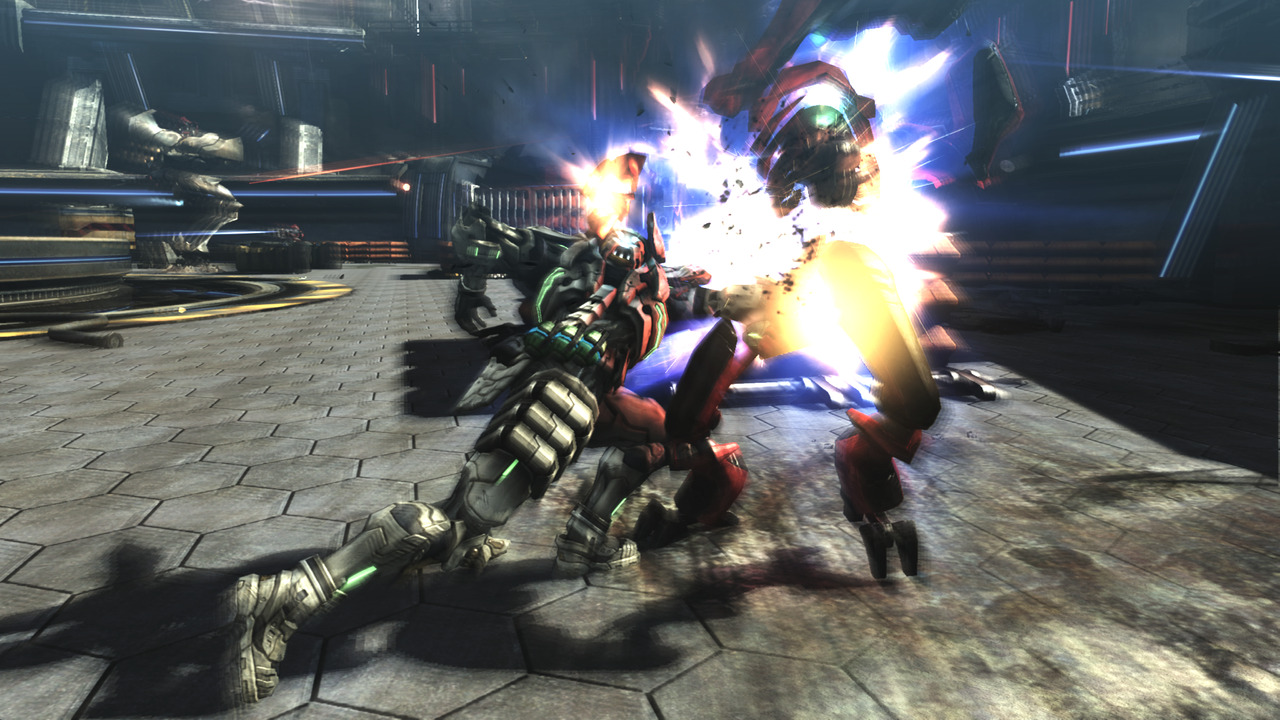
Coming off an abortive attempt to wring even an ounce of fun out of Fallout: New Vegas, Vanquish was a tonic. Shinji Mikami's latest is about relentless, agitated movement; whether that be a sprint towards your enemy for a full health clash, or a zippy retreat to let your shields recharge. You never sit still. Vanquish is a rock solid recalibration of populist cover mechanics polluted with boss rush gameplay and Japanese mech-suited heroism. Play is essentially just dealing with a series of partitioned, foe heavy arenas. Juggle rocket-man skill sets and on-fly weapon load-outs, whilst harassed by an endless charge of communist robots. Short, and designed specifically for Game+ super-play, Vanquish feels like a heyday Capcom title - Godhand with guns, or PNO3 with cigarettes and dick-man swagger.

Best of? Schmest of!

Top ten lists are deadly difficult, perhaps only possible with a healthy slug of retrospect. In my experience, the rush to find something definitive can mean choosing a credibly good, but impersonal work that ends up bugging the shit out of you (I'm looking at you, Disaster Year 2009 winner The Hurt Locker). Compilers are hamstrung by international release schedules for a start, who in the UK can reasonably be expected to put together a list containing the greatest feature films released in 2010 knowing that True Grit and Black Swan can be seen abroad, but not here? It's a complete dick kick. Are we to sit patiently on list drafts long into 2011 just to see if Summer Wars and Thirteen Assassins measure up against the rest of the year's best?

Sometimes, it's simply a lack of time available on the reviewers part. Video Games suffer most here. Having taken on the vast, frontier expanse of Red Dead Redemption, does anyone have enough spare time to fit in Mass Effect 2, or Super Mario Galaxy 2 as well? What if the list maker is so crack-addict obsessed with grinding through each and every Prestige level of Modern Warfare 2 that they barely play anything else? The ten games and films that follow, while not necessarily the absolute best things ever in 2010, represent works that I either enjoyed watching or tinkering around with. In short, my time was well spent. To follow: Ten Video Games 2010, and Ten Films 2010. Enjoy!