
Sunday, 31 July 2022
Saturday, 30 July 2022
I Know What You Did Last Summer

Hurled into production after screenwriter Kevin Williamson scored a box office hit with Scream, director Jim Gillespie's I Know What You Did Last Summer is a far more routine pass at a late 90s slasher. The film is content to idle forward, slowly ticking off the remorseful teens who ran over a night-time stroller then tipped his bleeding body off a pier, so as not to disturb the bright futures they saw immediately ahead of themselves. Structurally speaking, I Know is the anti-Scream in that it deliberately thwarts the audience's natural desire to speculate on the identity of the killer. Roseanne vet Johnny Galecki plays Max, a nerdy snooper who displays all the hallmarks of a suspicion magnet: he's nursing an unrequited crush on Jennifer Love Hewitt's Julie; he's a whipping boy for the male contingent of her friendship group; and, crucially, he spots the teens acting suspiciously following the car crash incident that sits at the centre of the piece.
Rather than string the audience along using this Max character, Williamson's script, an adaptation of Lois Duncan's 1970s young adult book, quickly jettisons him. The impulse behind this decision has a sense of deconstruction to it - this most likely suspect is now off the board and, surely, all bets are off if innocent bystanders are themselves being murdered? Unfortunately this writing flourish doesn't then pave the way for a startling new revelation that could be intuited from a close examination of the film's opening act. If Max, this unconnected but axe-grinding witness, has been slain then who could possibly be taunting this group? Naturally suspicion falls on the bashed-in body they dumped in the drink. This new framing implies a supernatural element in the film, one seemingly borne out by the Fisherman killer's ability to fill a car boot full of crabs feasting on a bloated teenager, then perform a full spit-and-shine service in the minutes between Julie discovering this nautical horror and her attempts to then reveal it to her beaten-up friends.
The Fisherman killer's taunting goes beyond a simplistic, tit for tat revenge. Indeed the complete failure of any of these characters to thrive following that fateful night seems to indicate that the piece itself is acting against them. I Know is surprisingly prim in that sense. Williamson denies these characters the lives they dreamed of, hammering them back into small-town routine or, in the case of the most virtuous character Julie, having her unconsciously sabotage her chance at escape. There are even notes that imply that this is a just, tormenting, punishment being enacted from beyond-the-grave - Ryan Phillippe's image obsessed rage case has his good looks fouled (but not ruined) by a ghostly hit-and-run driver while Sarah Michelle Gellar's Helen has her beloved hair trimmed into a neat bob while she sleeps - but this spectral swirl ends up terminating in the dull den of a middle-aged man, grasping at his own straws. In the end this Fisherman killer is an unheralded aside who jumps through hoops to excuse these teens of their inciting crime.
Saturday, 16 July 2022
Thursday, 14 July 2022

Tuesday, 12 July 2022
Thor: Love and Thunder

Star quality can be difficult to define. What is it that makes an actor appealing in a way that goes beyond the deliberately simplistic confines of brand-first filmmaking? Is above-the-title billing even a consideration that can be applied to the modern Marvel machine? Since Robert Downey Jr's departure there seems to have been a concerted effort to tidy away the idea of a bankable, middle-aged, leading man. The unending Disney slate preferring, instead, to offer up a hyper-caffeinated production line of poppy neophytes - a sort of The Mickey Mouse Club for big-screen action cinema. Whatever the desired destination, Taika Waititi's Thor: Love and Thunder presents an interesting case study in silver screen allure not 10 minutes into its runtime. We get a Chris-off: Chris Pratt versus Chris Hemsworth. Pratt, recently seen in the excretable Jurassic World Dominion and a veteran of several streaming-only also-rans, seems better able to communicate the snappy (and increasingly dull) impatience that underlines the majority of the interactions in this four colour universe - he's a living embodiment of Joss Whedon-style scripting then. Pratt offering himself up as a mouthpiece for the frustrated point-scoring that has, undoubtedly, burrowed itself deep into the series' DNA - a tick that refuses to be dislodged.
Chris Hemsworth does something completely different. There's very little sense that he's concerned with seeming cool or even credible within this specific Summer blockbuster context. It's not even that he's behaving above the material, he's simply apart from the myth-making we've been trained to expect from the live action Disney floppies. With that in mind, Hemsworth's performance as the oblivious himbo secretary in Ghostbusters: Answer the Call seems to have become the actor's calling card. Hemsworth, likely recruited for that film because of his then-recent Marvel ascension, revealed a genuine instinct for absurdist comedy; one that seems to be completely at odds with his muscular movie star looks. If anything his fluency in pure nonsense adds an extra layer of bafflement to his strapping performances. Watching Love and Thunder, it was difficult to not be constantly reminded of Terry Jones and Terry Gilliam's post-Monty Python projects - Ripping Yarns or Erik the Viking; Time Bandits or The Adventures of Baron Munchausen - pieces in which expensive spectacle operates as a sight gag rather than an invitation to gasp. Collectively, these works all revolve around deluded maniacs who, it is eventually revealed, have their heart in the right place. At this point, Hemsworth's Thor has had his peculiarities exploded. The odd farcical aside has become the totality of this character. Broadly, Hemsworth's Thor is an invincible superhero who combines the moulded physique of Arnold Schwarzenegger with the good-natured psychosis of a Michael Palin.
Wednesday, 6 July 2022

Monday, 4 July 2022
Sunday, 3 July 2022
Top Gun

At least initially, Top Gun presents as a defiantly shallow experience. The story of Tom Cruise's Maverick, a Naval hot-shot who encounters a top-secret Soviet aircraft, is told with the glossy visual language of an MTV music video. The plot hinges on a relationship between this young man and an older woman, Kelly McGillis' Charlie Blackwood, a civilian instructor at the TOPGUN Naval academy who has Pentagon-level clearance. Jim Cash and Jack Epps Jr.'s screenplay describes Maverick in far younger terms than would be appropriate for a serious-minded military thriller. There's still something of the frat-boy pugilist about him and his desire to transform every encounter or relationship into a kind of game: endless opportunity for Maverick to flash his boyish smile then come out on top. This coping mechanism comes under attack when Maverick is recruited for a secretive wargame that requires heated de-briefs from dangling love interests in front of an audience of chilly peers.
Sport is stressed again, this time in structural terms. Maverick is the small-town star graduating to a college-level arena in which everyone is just as skilled as he is. How will he cope? By sleeping with his professor, of course. Eventually, a creeping doubt in his own abilities as well as an acute identity issue begin to pick away at this Maverick. Characters within the film begin to address him not by the super cool call-sign he self-identifies with but by his less exciting civilian name. This penetration of Maverick's deliberately constructed carapace is doubly troublesome for the young man because his family name carries its own weight. Grins becomes grimaces; exposing imperfect teeth. Maverick's father, Duke Mitchell, was a Vietnam era pilot who perished in such a way that all records of his passing are sealed and stamped confidential. Maverick's true name, Pete Mitchell, initially registers as a kind of invective, deployed to undermine. Eventually though - after Maverick learns the heroic truth of his own father's death - the name takes on a liberating and transformational power of its own. Maverick's late acceptance of this less obviously flashy persona resolves his insecurities, allowing him to become a more complete dogfighter.
Director Tony Scott and cinematographer Jeffrey L. Kimball employ the commercial beauty of car adverts to bolster an artistic intent that wavers (knowingly) between these softcore pornographies and a seat-of-your-pants coverage that recalls reportage. Male bodies are lovingly appraised, noting the pinkness of their sunburnt skin or the ripple of a flexed muscle. The actors are therefore transformed into products, as adoringly photographed as the F-14 Tomcats that batter in and out of frame during the airborne battles. A clear constant across all Scott's work though is the desire to glimpse (then project) secret moments of genuine expertise; be that Denzel Washington's wounded bear act in Man on Fire or a tight close-up of a pistol ejection port being put through its paces by a dead-eyed Mafiosi in True Romance. Top Gun's opening credits are built around supersonic jets landing then taking off from a frigate at sunset. We don't follow the peeling aircraft though, we stay with the people hustling and prepping for the next influx. The sequence even accounts for the idea that, for these Signal Officers, there's a sense of monotony to this task. They've done it many times before. Scott and Kimball then, assisted by Chris Lebenzon and Billy Weber's edit, draw out the tiny, dreamily focused moments in which these men add flourish to their actions. We see them break - ever so briefly - from a well-drilled discipline to display anachronistic, human moments amongst all the cold military machinery.
Wednesday, 29 June 2022

Tuesday, 28 June 2022
Doctor Strange in the Multiverse of Madness

Although this is Sam Raimi's first pass at a Disney era Marvel character, Doctor Strange in the Multiverse of Madness is the director's fourth adaptation of works that can be traced back to writer-illustrator Steve Ditko. As such, it's tempting to examine Multiverse within the context of Raimi's own web crawler trilogy. How then does this Doctor Strange episode measure up to the Tobey Maguire Spider-Man films? While there's less - but not zero - willingness to physically and mentally torture the film's leading man, Multiverse does improve on these previous works in one single instance: it combines the role of the leading lady and the villain into one super-character, subject to the extended attention you'd expect to be apportioned to the former while also acting with the ruthless determination of the latter.
The first Raimi Spider-Man seemed to be positioning Kirsten Dunst's Mary Jane as a co-lead for that franchise, subordinate to Peter Parker's overarching journey but still able to eke out her own little corners of agony. That film's sequels were less inclined to follow that blueprint, discarding her perspective almost entirely in the theatrical version of Spider-Man 2 (an extended home video cut gives her a few underwritten asides) then transforming her into a prize to be haggled over in Spider-Man 3. A pivotal scene in the first Spider-Man has Parker inadvertently hear a screaming match between Mary Jane and her ranting father. He observes something private and embarrassing but doesn't then attempt to use this information against Mary Jane. Instead he commiserates, clumsily, before Mary Jane whisks herself away, smiling through tears.
Although designed - in the screenwriting sense - to allow the audience to see a gentle, non-judgmental side of Parker, how Dunst plays the scene keys us into the idea that Mary Jane has her own separate narrative arc, one distinct from, but complimentary to, Spider-Man's. Both characters are working class children trying to disconnect from their impoverished home environments to make something less mundane out of themselves. They both dream of a broad kind of adulation; a stardom that asks for little of themselves in return. Michael Waldron (the writer of Disney streaming series Loki and the "The Old Man and the Seat" episode of Rick and Morty)'s Multiverse screenplay does something similar with its two older leads. Benedict Cumberbatch's Doctor Strange and Elizabeth Olsen's Scarlet Witch are both creeping deeper into middle-age bereft of personal connection. Strange devoted his life to the pursuit of magic, missing out on a relationship with Rachel McAdams' Christine Palmer, while Wanda suffered through a pastiche of American sitcoms that gifted a phantom family, then zapped them away from her.
Disney streaming series WandaVision give us a bereaved sorceress who kidnapped an entire town before using them as tranquilised puppets as a way to work through the trauma she had experienced battling the world conqueror Thanos. The show, a superhero-flavoured update on The Twilight Zone episode "It's a Good Life", toyed with genuine disquiet before, ultimately, resisting the urge to paint Wanda as an out-and-out monster. This aversion ended up undermining the strangeness of the piece, an effect exacerbated by a series finale that attempted to drum up enthusiasm for a television budgeted beam war. Multiverse demonstrates far less restraint, Scarlet Witch slaughters dozens of mystical innocents and superhero stand-ins. The film even going as far as summoning up a team of vaguely fascist Avengers from an alternative reality for Wanda to (literally) pull limb from limb. Raimi consistently asserts himself in this cheery cruelty, working against Disney's well-established formula - one that demands an irreverent stance on permanence - by burning tossed-off redshirt characters into the audience's memory. This effect achieved by giving these no-hopers deaths so alarming that their passing lingers arounds the film's edges like radioactive fallout.
Thursday, 23 June 2022
Wednesday, 22 June 2022
Thursday, 16 June 2022

The Northman

When The Northman begins, Amleth - the Viking Prince who will soon consign his life to the pursuit of vengeance - is still a boy. His father, Ethan Hawke's stout King Aurvandill War-Raven, returns from conflicts abroad with a seeping injury, one that seems likely to expediate the guileless prince's path to the throne. When considering his child War-Raven lasers in on Amleth's innocence; he senses something pure and uncorrupted in this cossetted, wide-eyed adolescent. Traits, incidentally, that this King feels are incompatible with the brutal monarchy that War-Raven has upheld. Despite protestations from Nicole Kidman's Queen, the father and his son partake in a ceremony designed to hasten Amleth's creep into adulthood. It's a shamanic ritual, resided over by Willem Dafoe's court fool, in which the two royals strip naked, bray and fart like animals, then drink mead spiked with a hallucinogenic. This witchery allows the pair to grasp at ethereal, reality-defying, visions that position their family within a massive tree root that extends off into distant futures.
Immediately following this psychedelic service, War-Raven is set upon and killed. Amleth escapes but never recovers from this outrage. His identity and outlook are frozen in the moments that he watched, helpless, as his father was murdered and his mother was carried away as plunder. Amleth therefore never quite shakes off the spell that was cast over him in that smoke-choked hut. The animal aspect that was summoned is never corrected by a return to the patterns and rhythms of a courtly life. The oath he swears during his escape - to avenge his father and free his mother - becomes an all-consuming ideological fulcrum. A desire for correction now burns within Amleth. The emotion has swallowed him whole, feeding the slathering, amoral might that lurks within. It's obvious then that The Northman owes John Milius and Oliver Stone's Conan the Barbarian a massive structural debt. Writer-director Robert Eggers and co-writer Sigurjón Birgir Sigurðsson treat that 1982 sword and sorcery film as a blueprint, battering a Scandinavian legend until it pivots on similar beats. Flourishes and embellishments are applied to Milius' sacred text: so while Conan steals a bastard sword away from a trembling Atlantean mummy, in Amleth's tale the corpse actually rises, joining battle with its graverobber.
The years between Amleth's flight and an opportunity to enact his revenge are a blur of frenzied violence. The prince - now played by a strapping Alexander Skarsgård - is a mercenary working with a clan of Viking berserkers. Pointedly, Amleth is party to, but not directly involved in, a kind of casual atrocity that undermines the conceptual purity of his own personal quest. His band generates enmity on a tremendous scale, tearing children and babies away from their screaming mothers then burning them alive. Skarsgård communicates a sheepishness in these scenes; an understanding that he is a component in a machine that perpetuates the kind of misery that drives his own vendetta. Later when Amleth has lied his way into a position that allows a chance at retribution, real-life circumstances gnaw away at his fantasy. The Wagnerian torment he has given his life over to is repeatedly undermined. First by the diminished circumstances he finds his treacherous uncle in, later by the poison that drips from his own mother's mouth. Eggers and Sigurðsson never let us forget that, in his heart, Amleth is a thwarted child. Jealousy prickles when he sees his mother loving another son and he willingly suffers through months of slavery just to decode a familial affection that he himself has never experienced. The final act of The Northman sees Amleth sinking deeper and deeper into delusion as a response to the devastating truths that assault him. The form of the film twists and turns in sympathy, rejecting muddy historical reality in favour of supernatural reverie.
Saturday, 11 June 2022
Friday, 10 June 2022
Street Fighter 6 - HANDCUFFS
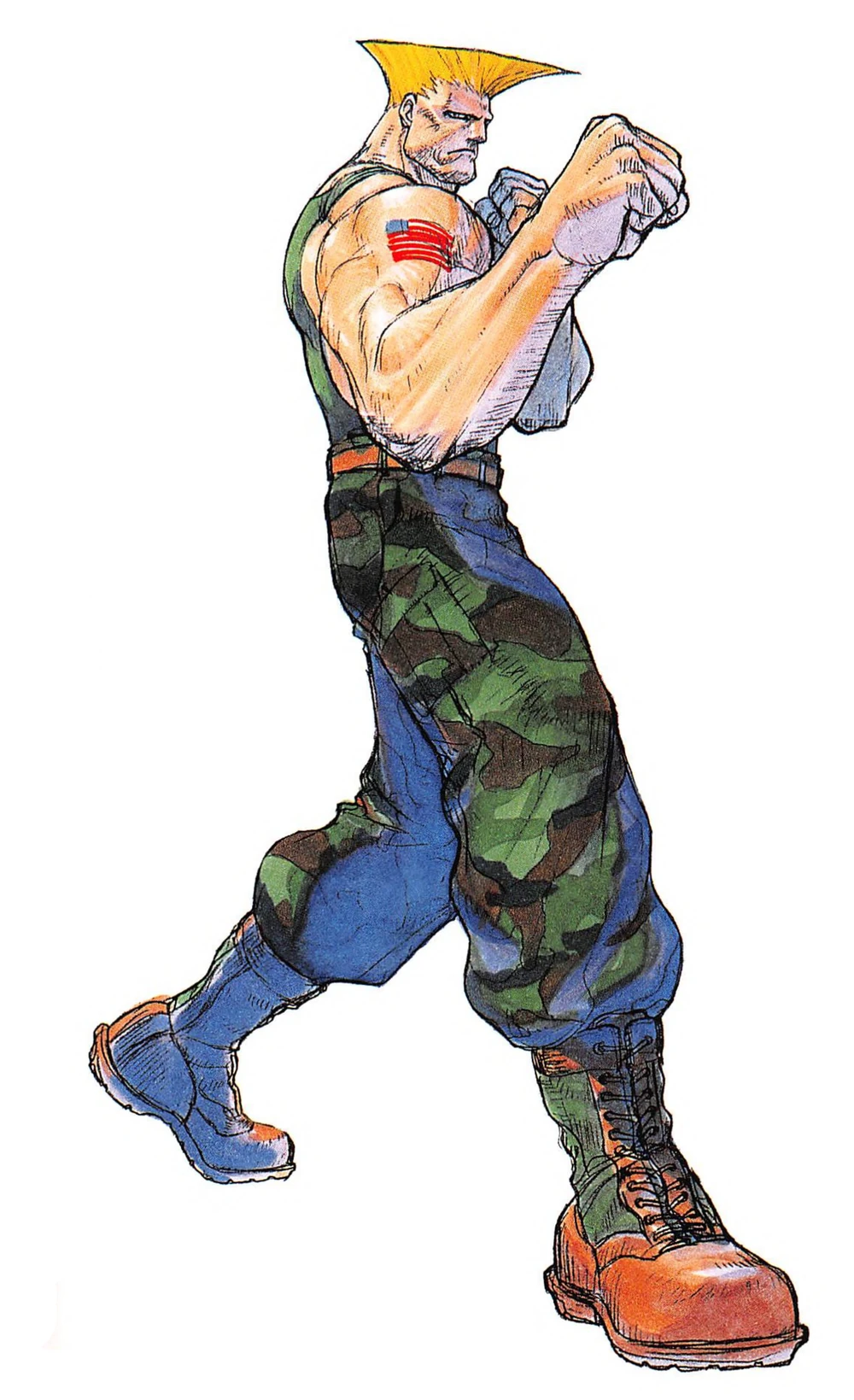
In terms of instantly recognisable video game characters, Street Fighter II's World Warriors take some beating. Each one of the original eight globe-trotters were so perfectly composed that even the lightest remix (Hyper Fighting's colour swaps excepted) borders on pointless. Not that Capcom is happy to rest on their laurels. The company can't help burying their cast under affectations that players then can't wait to reverse, necessitating a trip to the app's online shop to pick up a classic costume. For instance, did Akuma really need a lion's mane in Street Fighter V? Similarly, after hitting on that cracking undead Ryu design in Super Street Fighter IV: Arcade Edition, was V's killing intent variant in desperate need of a pair of neon pink devil horns? So what wilful sabotage have Capcom cooked up for their sixth instalment? Aside from a Ryu that (in fairness) looks genuinely fantastic we have a Guile with the jawline and blonde facial hair of WWE's resident belt hoarder Brock Lesnar. Not awful then, but still not a patch on a Super X-era Daigo Ikeno pin-up.
Final Fight Ultimate - BLASTED
First look at a Final Fight fan project that shrinks Capcom's seminal coin-up down to Mega Drive dimensions. Although there's not much but menus in this clip, Edmo Caldas, Master Linkuei and Mauro Xavier's Final Fight Ultimate already looks about on par with the nearest equivalent adaptation, the 1989 Mega CD release, and conclusively trumps the period SNES cart(s) by allowing players to chose from all three street fighting characters. Although hardly a fair match-up, given the intervening decades of accumulated compiling know-how, it's still fun to see Sega's humble 16-bit system pushed to its limit.
Subscribe to:
Posts (Atom)