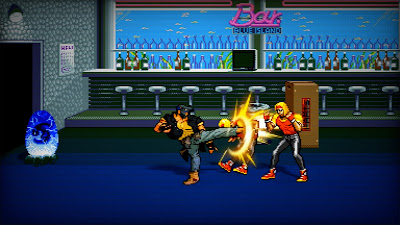
Although often bizarre to look at, thanks to a digital scrubbing process that bleeds all the grain and noise out of the vintage clips, Peter Jackson's The Beatles: Get Back accomplishes a similar feat to the director's World War I documentary, They Shall Not Grow Old, namely it places the viewer inside an extremely specific space and time then lets them simmer. Rather than cower with rotting Tommies in a French field though, Disney+ subscribers are able to sit-in on three weeks of rehearsal as The Beatles prepare to record one of their last albums.
Pared down to eight hours (then divided into three episodes) from sixty hours of footage, Get Back differs significantly from Michael Lindsay-Hogg's 1970 documentary Let It Be, avoiding that director's more tabloid instincts to allow stories to emerge, slowly, on their own. Everyone (rightly) mentions Paul McCartney conjuring Get Back out of thin air but just as joyous is the day that Billy Preston visits Apple Studios and is immediately recruited by John Lennon to play electric piano. Preston's contribution to these session is transformative, instantly adding flesh to the bones of I've Got a Feeling and Don't Let Me Down, much to McCartney's obvious elation.

Paul Verhoeven's Benedetta - much like his book Jesus of Nazareth: A Realistic Portrait - seeks to define a human element that might otherwise be lost when examining booming religious fervour. Virginie Efira's Benedetta then isn't a wide-eyed innocent completely lost to her visions, she's a canny politician with a foresight either broadcast to her from heaven or, simply, originating from her middle-class upbringing and education. Taken to a convent as a child - Verhoeven insisting we see the financial transactions required for a wealthy landowner to secure their child a permanent position with this nunnery - Benedetta is immediately trapped beneath a collapsing statue of a Madonna bearing her breast to nurse Christ. Naturally, she takes comfort from this incident.
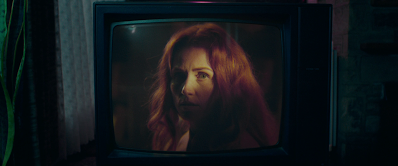
Enid's work for a 1980s Film Censorship Board is methodical, turning over objectionable sequences for home video release, looking for ways to lessen their intended impact. As Censor goes on we learn that this meticulous but bowdlerised approach to trauma extends out into Enid's personal life as well. Interactions are trimmed and edited until Enid is able to pass through them unscathed. An awkward moment when a colleague summons up the courage to ask her out for a drink is glossed over, Enid addressing some of his chatter but, crucially, not the invitation for a personal connection. Eventually, these tweaks multiply out of control.
Conversational elides prickle into an idea of conspiracy, a notion that Enid's parents know something about their daughter that she herself is unwilling to confront. This disquiet grows into instantaneous breaks with painful reality, Enid constructing a completely new - and untroubling - sequence of events the moment her present becomes unpalatable. The further into Enid's psychosis we go, the more of the film is given over to a version of events that exists solely in a damaged brain seeking a familiar structure. At this point writer-director Prano Bailey-Bond and cinematographer Annika Summerson collapse the width of the frame, readjusting the film's landscape to fit the pan and scan dimensions imposed on early VHS, allowing Niamh Algar's Enid to cure Britain of its social ills and correct her sister's fate.
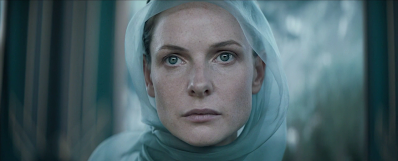
Throughout Denis Villeneuve's Dune there's a sense that mankind has battered forward through the centuries to arrive at a point where, for all their boons, they are just better able to beam their failures and shortcomings out into space. This pitch black universe, rather than offering brand new opportunities or transcendental experiences, has turned out to be an enormous canvas, just waiting to be painted red with fire and blood. Timothée Chalamet plays Paul Atreides, the heir to House Atreides, a dukedom in a vast - and largely unseen - intergalactic empire underpinned by dutiful servants, who double as human computers, and a powerful cult of witches who plant prospects throughout the empire, armed with breeding instructions. Paul is the result of one of those procreations (if not necessarily the strict order that directed it), a young nobleman afflicted with involuntary glimpses of moments in his life he has yet to live. The tension in Villeneuve's Dune then is that of an assumption. What is it that makes Paul Atreides special? His tragic experiences? His possession of a mind that trespasses outside strictly ordered time and space? Or is it simply his willingness to be battered towards Godhood?
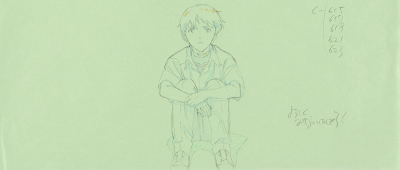
Evangelion: 3.0+1.01 Thrice Upon a Time initially puts Shinji Ikari to one side, the child experiencing a catatonic depressive episode in which he struggles to come to terms with a world he believes he destroyed in the previously instalment. Surprisingly, several of his school friends have also survived the apocalypse and the tumultuous years since, growing to adulthood - an emotional, as well as biological, state specifically denied to the plug suit children. These survivors live on a partitioned scrap of Japan, an agricultural village, protected by fantastical fencing technology, that works in concert with Miss Misato's massive war machine. Unlike the crew of the battleship Wunder, Shinji's Tokyo-3 High School classmates are welcoming, allowing the young man the time and space needed to reach some sort of emotional equilibrium.
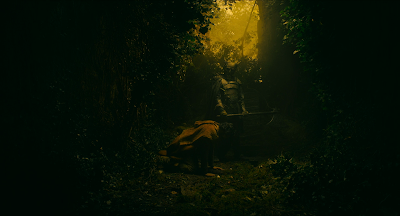
Eventually making his way to the Green Chapel, Dev Patel's Gawain encounters The Green Knight, slumbering. Once awake, the creaking woodsman - portrayed in this setting as a curious mix of Father Christmas and the Devil - hurries, as agreed, to deprive his visitor of his head. Reluctant to give his life up so easily, Gawain attempts to flee. It's here that David Lowery's film lifts a conceit from Nikos Kazantzakis' The Last Temptation of Christ (not to mention Martin Scorsese's filmed adaptation), allowing the sacrificial lamb to experience the life he believes he might go on to live.
Whereas Scorsese's film depicts a certain amount of human contentment before the rot sets in, Gawain's yuletide present is a lifetime lived in minutes; experiences and events overlapping into one long, thundering, march of despair. Gawain sees his future as a sleepwalker King, finally knighted moments before Arthur himself passes away. Entrusted a kingdom, Gawain allows the hesitancy and indecision that marked his final encounter with the Green Knight to define his reign. Gawain's vision lingers on images of his mother, quietly aghast at her child's repeated failures. Her disappointment is compounded by decisions rooted in Gawain's inflexible idea of monarchy - isolation and brutal attempts at propriety track, neatly, into a bone-deep despondency.
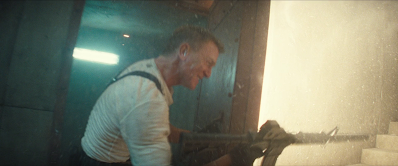
Although in the early going No Time to Die's action sequences play around with a similar kind of bored expertise as Spectre - most assuredly in a twilit forest where Bond easily outmanoeuvres umpteen vehicular assaults - when Safin's terror presses closer to home, Daniel Craig's Bond is seen to really struggle. In Fukunaga's now signature (anxiety inducing) oner, we see James limping up a mouldering staircase with attacks coming from every conceivable direction. In these moments Craig's physical dexterity and determination - genuine positives when considering this character that have become less and less remarked upon the further away we get from Casino Royale - are truly allowed to shine. Peril is dealt with fractionally, an entire spinning plate apparatus with Craig dead centre, adjusting the henchman, firearms and grenades constantly hurled his way.

A Christmas ghost story, one in which Kristen Stewart's rebuffed princess finds herself trapped, by obligation, in a house and station that seems to slowly - over decades - digests its inhabitants. Pablo Larrain's Spencer is gorgeous, Claire Mathon's photography recalling a specific, period, kind of photochemical processing that leaves images lightly blown-out by the low-hanging winter sun. An icy chill seems to physically roll off early morning shots of this Sandringham Estate, communicating a stillness, not just in temperature but in time. Stewart's Diana is human and modern, a young mother being feed into a system that runs on callous, impersonal, marriages and an impenetrable propriety that transforms mute maids and an overeager equerry - in function - into gaolers. Larrain's film, written by Steven Knight, works against Diana's red top martyrdom by, repeatedly, presenting her as a person - a child - running headlong at an all-consuming disapproval.
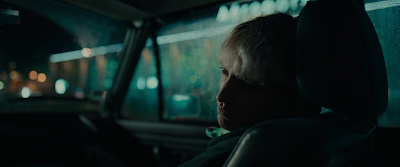
Titane, like Spencer, derives tension from people attempting to silently navigate a series of acute nervous breakdowns while stuck in social situations that require they contribute either a charming or pliant exterior. Julia Ducournau's film is, in one sense, kin to Shinya Tsukamoto's Tetsuo: The Iron Man in that both films consider the ways in which symbiosis with metal can pervert the human body. Skull fractured in a car accident as a child, necessitating a titanium plate that cups her brain in place, Agathe Rousselle's Alexia becomes fixated on violent, speeding, automobiles as agents of sexual desire.
This affection is reciprocated by a tricked-out lowrider that batters Alexia's changing room door at an expo show she has just worked; their dalliance leaving Alexia swollen with a child that causes her body to leak motor oil. Where Tsukamoto explored metamorphosis in terms of sweaty sexual anxiety - an otherwise smooth face suddenly prickling with steel shavings or a penis mutating into a spinning, lethal, drill bit - Ducournau's film charts her transformations at a stately pace, forcing Alexia to constantly contend with a physical body that refuses to comply with her wishes. Posing as the missing son of Vincent Lindon's bereaved firefighter, Alexia spends the majority of her pregnancy wrapping her body up in a painful bindings, desperately trying to thwart the growing suspicions that surround her. When constriction fails, she takes to punching her stomach; hammering away at the unwanted child that refuses to die inside her.
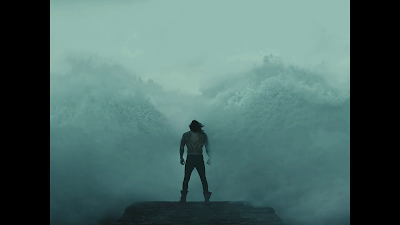
Upfront, Zack Snyder's Justice League offers a very clear demonstration of what the slighted director brings to this material, beyond a towering aspect ratio and a colour palette attuned to unyielding metals. In Snyder and screenwriters Chris Terrio and Will Beall's undiluted version, Batman's first meeting with Aquaman on a remote Icelandic outpost is presented as an incredible effort in of itself. Ben Affleck's Bruce Wayne has surmounted cracking glaciers and a storm that grounded all manner of aircraft just be in the same room as the rightful King of Atlantis. Their meeting concluded, Jason Momoa's regal roadie strides off to be in the ocean. Snyder focuses on Affleck's despondent expression, his glance off this would be ally as it starts to snow and a group of women begin singing the kind of mournful, lilting, prayer you'd expect to hear at a monarch's funeral. Bruce worries that his words - his warning - has fallen on deaf ears. When he remembers to look back, Arthur has gone and gentle ripples are fading on the water.