It seems churlish to criticise a Scream sequel for being so relentlessly self-referential. After all, the entire series is built out of its characters' acute awareness that the slasher movies they have experienced as viewers can now be used as ammunition against the costumed assailants trying to stab them. The frazzled lectures of each film's terminally aware film freak then function as pitch meetings: the fiction itself speaking to its audience about how they can expect events to be framed from that point on. They either lay out all the twists and turns, with an ironic inflection, or firmly establish a daunting step-by-step that will then be subverted. By Scream VI though, co-directed by Matt Bettinelli-Olpin and Tyler Gillett, this sustained commitment to metatextual reproduction has transformed into navel-gazing. Despite a New York setting, this is a strangely routine sequel. An instalment happy to churn, adoringly, through the sights and sounds of its own immediate predecessors rather than, say, the 1970s and 1980s horror films that defined the (by now long forgotten) tape rental era. So while Wes Craven's Scream 2 might have featured a sequence based around screenwriter Kevin Williamson's memories of Dario Argento's The Bird with the Crystal Plumage, Scream VI simply regurgitates the invincible supporting cast and university setting of its own ancient ancestor, Scream 2.
Showing posts with label Wes Craven. Show all posts
Monday, 1 May 2023
Scream VI
Labels:
Courteney Cox,
Films,
Matt Bettinelli-Olpin,
Scream,
Scream VI,
Tyler Gillett,
Wes Craven
Friday, 14 April 2023
Wes Craven's New Nightmare
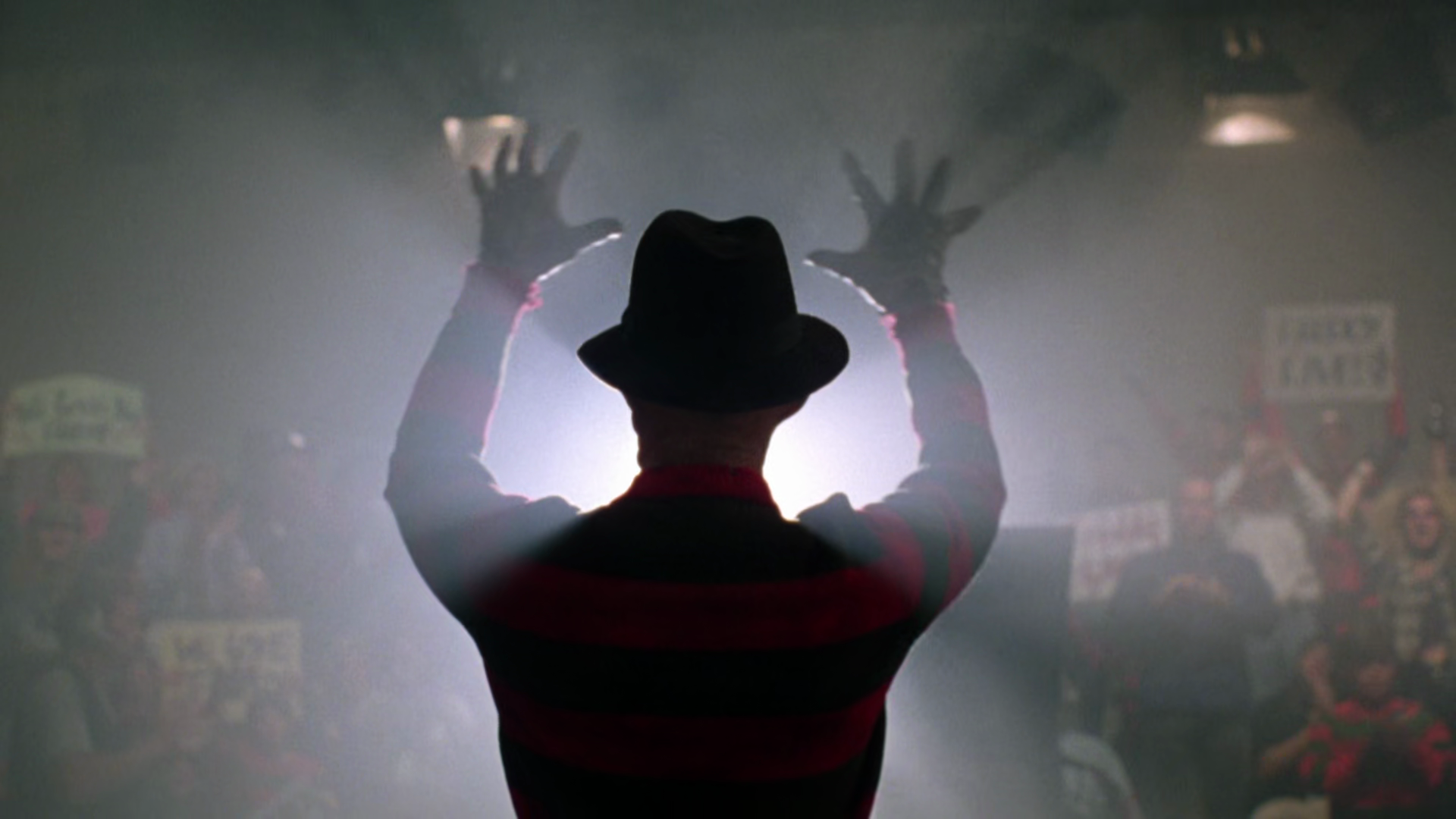
Comparatively restrained, especially for such a late sequel, Wes Craven's New Nightmare renounces tick 'em off teens to focus on torments with real weight and pain attached to them. This seventh outing for Fred Krueger defies its more formulaic predecessors by really spending time soaking in the anxieties and trauma generated by a killer who is, innately, supernatural. The marks he leaves demand to be explained away, to be attributed elsewhere by victims ashamed to even be considering this phantom's existence. Where previous instalments have careened from teenager to teenager - as they drift off towards oblivion - New Nightmare attaches itself to 30 year old actress Heather Langenkamp, playing herself as a widowed mother, as she slowly loses her grip on reality. Langenkamp, who starred as Nancy Thompson in the original A Nightmare on Elm Street, is assailed throughout New Nightmare by a variety of terrors that can be broadly defined by the tabloid-baiting idea of disreputable media having physical purchase in, and a pollutant effect upon, the real world.
This notion goes beyond a badly made up Robert Englund (this time wearing leather pants and sporting a plastic looking bone claw) crawling all over a hospital ceiling, dragging a bleeding babysitter behind him. Miko Hughes plays Langenkamp's son Dylan as a sleepwalking preschooler gripped by what appears to be sustained abuse; Craven's New Nightmare consciously forgoing the presentation of Krueger as the quipping serial killer of its immediate predecessors. Here he's monstrous in ways that defy deification. A series of telephone calls in which Langenkamp is taunted by Freddy culminates in an episode in which the phone receiver transforms into a tongue to lick Langenkamp's face while the voice at the other end of the line gloats that it has touched her child. Craven then does not shy away from the paedophilic aspect of his creation - this Krueger revels in the degradation and corruption of children. Indeed much of the New Nightmare's third-act is built around teams of nurses and paediatric doctors trying to separate a Freddy tainted Dylan from a mother who has, they believe, conjured up genuine obscenity by starring in a video nasty. New Nightmare pivots on the idea that, in the wider cultural conversation, these films - Craven's life's work - are often seen as so contentious as to be mind-altering.
Thursday, 22 April 2021
Scream 3
Firmly in the realm of Scooby-Doo, Where Are You! nonsense, Scream 3 sees the series slide further into a bloodless, but still entertaining, state of self-parody. Director Wes Craven's third entry, working from a script by Ehren Kruger (Transformers: Revenge of the Fallen, Dark of the Moon and Age of Extinction), allows the characters to drift a little further away from each other before it finds a homicidal cause to reunite them. Neve Campbell's Sidney Prescott lives in picturesque seclusion, fielding crisis calls from victims of domestic abuse. David Arquette's Deputy Dewey, now a little steadier on his feet, works in Los Angeles as a technical consultant on Stab, the schlocky horror franchise based on the events of this film series. Courteney Cox's indefatigable Gale Weathers is also out and about in Tinseltown, meeting the actress who portrays her on the silver screen - Parker Posey's hare-brained Jennifer Jolie - and investigating the secret Hollywood history of Sidney's dead mother, Maureen.
Seemingly barred from exploring lacerating violence, this sequel leans closer to the strange and supernatural than any previous Scream. Sidney is visited in her dreams by her murdered parent, a restless, rotting spectre who smears her congealed blood all over her daughter's beautiful bay window. This film's Ghostface - essentially an abandoned child in the midst of violent hissy fit - appears then disappears with the teleporting logic of a Jason Voorhees. He is also, similarly, immune to small arms fire. This turbo-charged killer has access to a portable voice changer that allows him to sample and remix speech from any source, enabling all sorts of simulated betrayal. The show business setting, broad enough to encompass other damned citizens of the Weinstein cinematic universe, vacillates between the comedy observed in unacknowledged narcissism and, in its bleaker moments, hints at the yawning chasm within the powerful men who take full advantage of young, struggling actresses. In this sense Scream 3 does provide a thematic connection to the first film, but the crimes of these sexually abusive men are crowded out by a final act reveal that dares to rewrite established text.
Labels:
Courteney Cox,
David Arquette,
Films,
Neve Campbell,
Scream,
Scream 3,
Wes Craven
Thursday, 15 April 2021
Scream 2
Rushed into production after the success of the first film, Scream 2 is less concerned with following up on the themes and threads of its predecessor and more interested in examining itself from a metatextual perspective - the quicky sequel as an obligatory, and financially lucrative, imperative. Director Wes Craven and screenwriter Kevin Williamson both return, their second stab at the material seeking to deconstruct immediate follow-ups as a concept, specifically the ways in which successive instalments attempt to re-bottle lighting. In Scream 2's case, this is an especially difficult proposition. How can the filmmakers follow on from a film that was designed to present itself as literate, but ironic, and which concluded with both murderers definitively vanquished? Turns out branding is the series' most consistent aspect then - Scream 2's killers adopt the same ghostly fright mask persona as Stu and Billy Loomis.
Although not necessarily ill-considered, there's a sense of needless haste in Scream 2. Particularly when it comes to the finesse side of the production. The first Scream had a strangely indifferent musical voice, crowbarring in Nick Cave & The Bad Seeds or grinding mood pieces to bluntly and instantly establish a scene's tone. Scream 2 goes even further into temp-tracking, licensing a Hans Zimmer piece from John Woo's smoky, swaggering Broken Arrow (released not even two years prior) that springs to life every time David Arquette's unwavering ex-cop Dewey does something gently masculine. The music isn't at odds with the image in this instance, in fact the unhurried plucking compliments them greatly, but you're always aware that these notes have been lifted from another, hardly obscure source. At the other end of the scale, the fetid approximation of Ska that closes the film does nothing but puncture a sadly listless Sidney's hard won sense of victory. This clumsiness extends out into Scream 2's structural make-up too: the détente between Neve Campbell's Sidney and Courteney Cox's muckraking reporter Gale Weathers dissolves so instantly that the falling out feels less like characters expressing personal betrayal and more like an artificial obstacle dumped carelessly into the film.
While not as fun as a high school friendship circle in homicidal meltdown, Scream 2's university setting does allow a certain kind of young adult pantomime to emerge. These students dress and behave with an air of affected maturity; teenagers straining to live with a straight-laced professionalism they've only read about in lifestyle magazines. Disappointingly, this tension between commercial façade and disappointing reality doesn't feed into either of the killers' intentions or identity. The duo stalking Windsor College don't have a motive carefully threaded throughout the meat of the episode either, their causes aren't even aligned with each other. Timothy Olyphant's Mickey has a reheated copycat motive while Laurie Metcalf's Debbie Salt eventually drops her phoney reporter cover to behave with the shrieking mania of a slasher movie mother. A far more bombastic conclusion than Scream's idiots dying in slow motion then. While the film doesn't quite come together thematically, it does contain a couple of carefully crafted set-pieces, the best of which sees Sidney and her friend, Elise Neal's Hallie, crawling from the back seat of a crashed patrol car, past the remains of a burst policeman and over an unconscious costumed murderer.
Labels:
Courteney Cox,
David Arquette,
Films,
Kevin Williamson,
Neve Campbell,
Scream,
Scream 2,
Wes Craven
Monday, 12 April 2021
Scream
Remembered for a misleading ad campaign that seemed to position Drew Barrymore as the star or the ways in which Jamie Kennedy's video shop clerk directly addressed the audience, Wes Craven's Scream - at least on this viewing - plays more like a film committed to detailing a particularly awful relationship. Neve Campbell plays Sidney Prescott, a traumatised teenager mourning the brutal murder of her gossip magnet mother. Her boyfriend, Skeet Ulrich's Billy Loomis, quivers with hormonal tension, absolutely desperate to trap Sidney in any situation conductive to him taking her virginity. Knowing the film's twist - that boyfriend Billy and his lickspittle, Matthew Lillard's Stu, are the killers - reorganises Craven's slasher film, magnifying the kind of pleading and placating inherent to any relationship in which one party is doggedly seeking some kind of access from another.
Billy is consistently thoughtless throughout Scream, acting with a creepiness that is only really massaged by the proximity Sidney allows this boy to have to her. Sidney holds a certain kind of status within the film, apart from being the main character she's portrayed as forthright, morally good, and willing to take physical action when prompted. The character therefore works against a designation of one-dimensional victim. This standing has a knock on effect for Billy: if the clever and collected Sidney sees something in him, maybe we should too? Really, Billy isn't too far away from the hornier male characters present in screenwriter Kevin Williamson's contemporaneous TV series Dawson's Creek. Billy is pop culture (rather than emotionally) literate and, seemingly, sensitive enough to play the long game with a girlfriend who isn't currently comfortable having sex with him. This young man needles though. Beginning with an impatient hectoring, his arguments grow steadily over the course of the film.
Billy's need to get his own way eventually reveals a complete absence of empathy. The ghost-faced Father Death costume that conceals Loomis and Stu when they are out on the prowl is not only emblematic of the stark psychological deficiencies driving these murderous teens, it also serves as a sustained structural wrong foot within the film: the warped Munch-mask is instantly identifiable as dangerous, but it's an anonymous and interchangeable kind of peril, equally likely to be a thoughtless prank as a violent haunting. Fully costumed, the killer's motives are chaotic and mysterious, an instant enlivening element for any scene threatening to sag. Unmasked though, the homicides that Billy and Stu have committed now clearly demand roots in human thought processes. What prompted these slayings then? Among the ex-girlfriends and love rivals are Rose McGowan's Tatum, Sidney's similarly direct best friend and the current girlfriend of Stu. Her murder - crushed in a malfunctioning electrical garage door - has a perverse curiosity about it, like a smug cat gloating over a dying mouse.
When the subject of Tatum's absence comes up, it's positioned as convenient for Billy and his continued attempts to get Sidney on her own. Stu is also dismissive when asked where his girlfriend is, outwardly unconcerned but apparently happy to be either complicit to, or the active element in, her elimination. This casual approach to human cruelty echoes throughout a film filled with myopic, predatory boys and the self-assured women they hope to taint. In this way Craven and Williamson's film skewers a genre often noted for knuckle-dragging sexual politics simply by offering up plenty of confident, capable women. The whodunnit guessing game is subverted too. By focusing all of the film's male outlooks around lascivious intent, Craven and Williamson implicate all of them. Every male character is used in ways that align with some barely disguised ulterior motive, be that the bumbling cop happy to lead an attractive newscaster down dark country lanes or the high school student who raped then murdered his girlfriend's mother because, in part, he couldn't bully her daughter into bed.
Labels:
Courteney Cox,
David Arquette,
Drew Barrymore,
Films,
Kevin Williamson,
Neve Campbell,
Rose McGowan,
Scream,
Wes Craven
Monday, 9 May 2011
SCRE4M
Rather than manufacture any sequences with a recognisable sense of tension or terror, Scream 4 is more comfortable taking diminishing swipes at the building-blocks of its own genre. Characters auto-critique their actions to a suffocating degree; for some reason director Wes Craven finds it interesting to shoot endless scenes of TV actors standing around trying to work out the perfect fake-out context for their own, inevitable, death. Scream 4 doesn't have anything to talk about. Unlike the original Scream's obsession with masculine violence within the knife and knicker genre, Scream 4 doesn't seek to deconstruct a distinct horror movement. Instead it more-or-less disregards current torture trends, or even PG-13 demakes, to invent meaningless 'new' rules based on no film anyone has ever saw. The film's violence is significantly more frenzied for this outing though, despite a series low 15 certificate, and the killer's identity and motive absolutely pop, but there's barely any foreshadowing to help the knife twist land. A bold, teeth-kicking conclusion is swerved too, wasted to serve a static fourth act where punishment is meted out. Brand boredom maintained for the inevitable fifth instalment then.
Labels:
Courteney Cox,
David Arquette,
Films,
Kevin Williamson,
Neve Campbell,
SCRE4M,
Scream,
Wes Craven
Subscribe to:
Posts (Atom)